
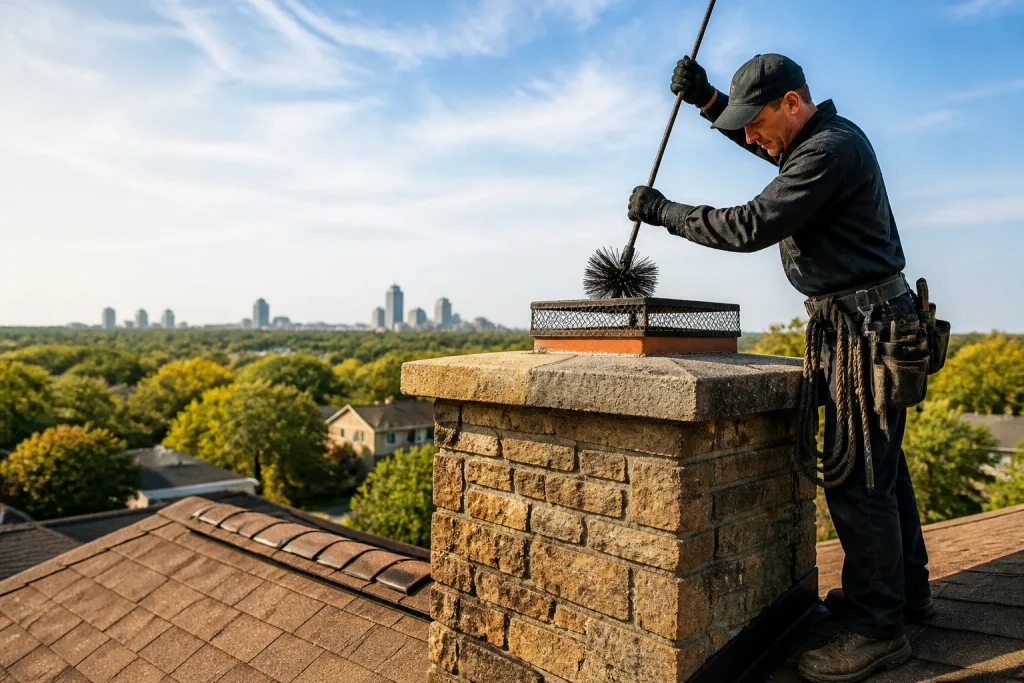
How to Choose the Right Chimney Cleaning Company in Lake Highlands
Chimney work is one of the few home service trades with a voluntary national certification, and that’s not an accident. The trade has historically attracted operators who bought a brush and a shop vac and called themselves sweepers, so the CSIA credential exists to separate trained technicians from the rest. In the DFW market, the ratio of certified to uncertified operators does not lean in the homeowner’s favor.
Here’s the short answer: choose a dedicated chimney company, verify any certification claims independently, and insist on a written condition report with photos. If you’d rather skip the vetting and talk to a specialist, call (833) 508-9984.
What does CSIA certification actually require, and how do you verify it?
CSIA certification means a technician passed a proctored exam covering NFPA 211 code, creosote science, venting, and inspection standards, and maintains the credential through continuing education. It is not a membership you buy. That’s the entire point of it.
Verification is the part most homeowners skip. A website badge is a JPEG; it proves nothing. To confirm a claim:
- Search the CSIA’s public certified-sweep directory by ZIP code or company name. If the company isn’t listed, the claim doesn’t hold.
- Ask whether the individual technician sent to your home is certified, not just the company. Certification attaches to people.
- Ask for proof of insurance as a separate item. Certification and insurance are different things, and a legitimate company will produce both without friction.
- Watch how they answer. A credentialed technician will tell you their certification number without hesitating. A company that deflects or gets vague about it is telling you something.
We work within the CSIA’s Level I, II, and III inspection framework, which matters in Lake Highlands because the housing stock here produces a lot of Level II situations: a chimney that has changed fuel type, a flue that has never been camera-scoped, a prefab unit nearing the end of its expected service life.
What’s the real difference between a chimney specialist and a generalist who sweeps on the side?
A specialist inspects; a generalist cleans. That’s the operational difference in one line. An HVAC company or handyman who offers sweeping as an add-on is typically equipped to remove creosote and not much else. The inspection is the part that gets compressed, because the crew’s training and tools don’t extend into flue evaluation.
What a dedicated chimney sweep brings to the same visit:
- Camera capability. A proper flue scan shows liner condition from the inside, not a guess from the firebox.
- Repair scope in-house. When the inspection finds a cracked crown or a deteriorating liner, a specialist can quote and complete the fix rather than hand you off. We handle the full scope, from the firebox to the cap, so nothing gets missed between trades.
- Material knowledge. Knowing the difference between a HeatShield resurfacing application and a full reline with a DuraFlex or Olympia Chimney system changes the recommendation and the cost. A generalist knows neither.
- Consistent personnel. Chimney work is all we do, which means every job gets a specialist, not a rotating generalist crew.
In Lake Highlands, where a lot of homes have been through gas log conversion or a prefab insert, the inspection depth is where the difference shows. A sweep-only outfit cleans the flue and leaves. A specialist notices the venting configuration changed and flags it.
What five questions reveal whether a company will upsell you?
Ask these before you book. The answers tell you more than any review page will.
- “Will I get photos of what you find?” A company planning to recommend thousands in liner work should be able to show you why. If photos aren’t standard, the recommendation is unverifiable.
- “Do you charge for the estimate?” We don’t. A free written estimate, set per job, removes the pressure to agree to work on the spot.
- “How do you document creosote?” The answer should reference stage (Stage 1, 2, or 3), not just “it was dirty.” Stage 3 glaze is a real hazard and requires specific treatment; “dirty” is not a diagnosis.
- “Can this wait?” An honest company will tell you when work can safely be deferred. If every visit produces an urgent recommendation, that’s a pattern.
- “Who performs the work?” If the sweep subcontracts the repair to a different company, you’re getting two inspections and two sets of incentives. Ask directly.
A chimney inspection isn’t a formality. It’s how we find small problems before they become expensive ones, and a company that treats it as a sales funnel will show you that in the first ten minutes.
What should a proper post-service report contain?
A professional sweep ends with a written report, not a verbal “you’re all set.” Here’s what belongs in it:
- Photos of the firebox, damper, smoke chamber, flue interior, and the exterior crown and cap. Before and after, ideally.
- Creosote stage notation with the degree of accumulation described in trade terms.
- Liner condition, stated plainly, whether clay tile, stainless, or prefab.
- Crown and cap assessment, since these are the leading source of chimney water damage in this climate.
- Any code or venting concerns noted during the Level I or Level II inspection, with a recommendation and a written estimate if repair is needed.
If you receive a report with none of that, you were charged for a cleaning, not an inspection. Those are different services at different prices, and the report is how you tell which one you bought.
What should Lake Highlands homeowners expect from their chimneys specifically?
Lake Highlands has a substantial share of homes built in the 1970s and 1980s, and that era of construction produced two things that matter for chimney care: masonry chimneys with clay tile liners now reaching the end of their reliable service life, and early-generation prefab fireplaces with their own venting limits.
Layer on top of that the number of fireplaces in the neighborhood that have been converted to gas logs. A gas conversion changes the moisture profile inside the flue, and a chimney designed for wood smoke doesn’t always vent gas byproducts the same way. That’s a Level II inspection question, and it comes up often here.
Our mild winters mean chimneys see less freeze stress than in colder regions, but they also mean homeowners sometimes skip annual service because the fireplace gets light use. Light use still builds creosote, and a chimney that sat idle for two seasons deserves a look before the next burn. When we do find a damaged crown or a failing cap, the fix is usually straightforward: a Gelco or Famco cap, crown repair, or a HeatShield resurfacing rather than a full reline. Protect your home from the top down.
When to call a pro
Call a specialist if you smell a strong creosote odor in warm weather, notice staining on the chimney exterior, see cracked mortar at the crown, or haven’t had the flue inspected since a fuel conversion. Those are the signals that the next step is an inspection, not another sweep.
Related services in Lake Highlands: chimney cap & crown work for water intrusion, and fireplace repair for damper and firebox issues.
One more thing worth saying plainly: nobody needs a chimney company that shows up in a van with a ladder, a brush, and a sales pitch. The trade has enough of those. We answer 24/7, with fast dispatch from 7am to 7pm, Sunday through Friday.
The Bottom Line
Choose based on three things: whether the company is a genuine chimney specialist, whether the certification is verifiable, and whether the inspection produces a report you can read and understand. Price and reviews are secondary signals. A cheap sweep with a thin inspection is not a bargain.
Our technicians have up to 8 years of experience, and we work with materials the chimney trade trusts, including DuraFlex, HeatShield, and Copperfield. The local pro is licensed and insured as their state requires. If you’re in Lake Highlands and want a free written estimate, call (833) 508-9984.
Frequently Asked Questions
A standard sweep in the Lake Highlands area typically runs $150 to $300, depending on flue length, access, and how much creosote has built up. An inspection is a separate service and priced accordingly. The written estimate sets the final price. Call (833) 508-9984 for an exact quote, which is free.
Look the company up in the CSIA’s public certified-sweep directory and ask whether the individual technician coming to your home holds the credential. A legitimate company will supply their certification number without hesitation. Call (833) 508-9984 if you want to confirm how we work.
A sweep removes creosote; an inspection evaluates the condition of the liner, crown, cap, and venting. If your fireplace has changed fuel type, has never been camera-scoped, or you’ve noticed staining or odor, you want the inspection. Most homes in Lake Highlands benefit from one before the next burn season. Call (833) 508-9984 for a free estimate.
Creosote accumulates in stages. Stage 1 is a light, brushable deposit; Stage 3 is glazed and highly combustible, and it requires specific treatment rather than a routine sweep. Skipping service also means small issues, like a hairline crown crack, go unaddressed until water intrusion turns them into structural repair. Call (833) 508-9984 and we’ll tell you honestly whether work can wait.
Written by the team at Chimney Sweep Lake Highlands.
Need Chimney Cleaning Help?
Call Chimney Sweep Lake Highlands - the local pro we connect you with is licensed and insured, with free written estimates in Lake Highlands.
(833) 508-9984