
Olympia Chimney Chimney Sweep in Lake Highlands: A Homeowner’s Guide
Most Lake Highlands homeowners can tell you the color of their front door and the age of their water heater. Ask whether their chimney is masonry or prefab and the answer is usually a shrug. That single fact changes how your chimney should be swept, what a technician looks for during inspection, and whether a repair quote is even in the right ballpark. Many of the ranch houses and split-levels across Lake Highlands were built with factory-built fireplaces, and Olympia systems turn up often in that housing stock.
If you’d rather leave the diagnosis to someone who does this every day, call (833) 508-9984 and we’ll take a look.
What Is an Olympia Chimney System, and Do You Have One?
An Olympia chimney system is a factory-built fireplace assembly: a steel firebox with refractory panels, a listed venting system, and components engineered to work together as a unit. It’s not masonry. It’s not a traditional brick-and-mortar chimney with a clay tile liner.
To identify yours, start with the firebox. Factory-built units have metal construction behind the refractory brick panels, and a data plate is usually mounted somewhere in the firebox opening or behind the screen. That plate carries the manufacturer name and model number. In many Lake Highlands homes built mid-century through the 1980s, that plate lists Olympia.
Here’s why the distinction matters:
- Cleaning tools differ. Metal flue systems in prefab units call for poly brushes sized to the flue, not the rotary equipment used on masonry.
- Liner assessment is different. A masonry flue gets inspected for cracked clay tiles. A prefab flue gets assessed for integrity of the listed venting system, which cannot be modified outside its listing.
- Repair rules change. Factory-built systems carry UL listings, and those listings dictate which parts can go back in. A generic replacement part is not an option, even when it fits.
We’ve seen plenty of quotes go sideways because someone assumed masonry and priced accordingly. Know your system type before you accept a number.
Maintenance Differences: Olympia Prefab vs. Traditional Masonry
Routine service on an Olympia system follows the same annual rhythm as any chimney, but the work inside that visit looks different. Here’s a side-by-side of what a technician actually does.
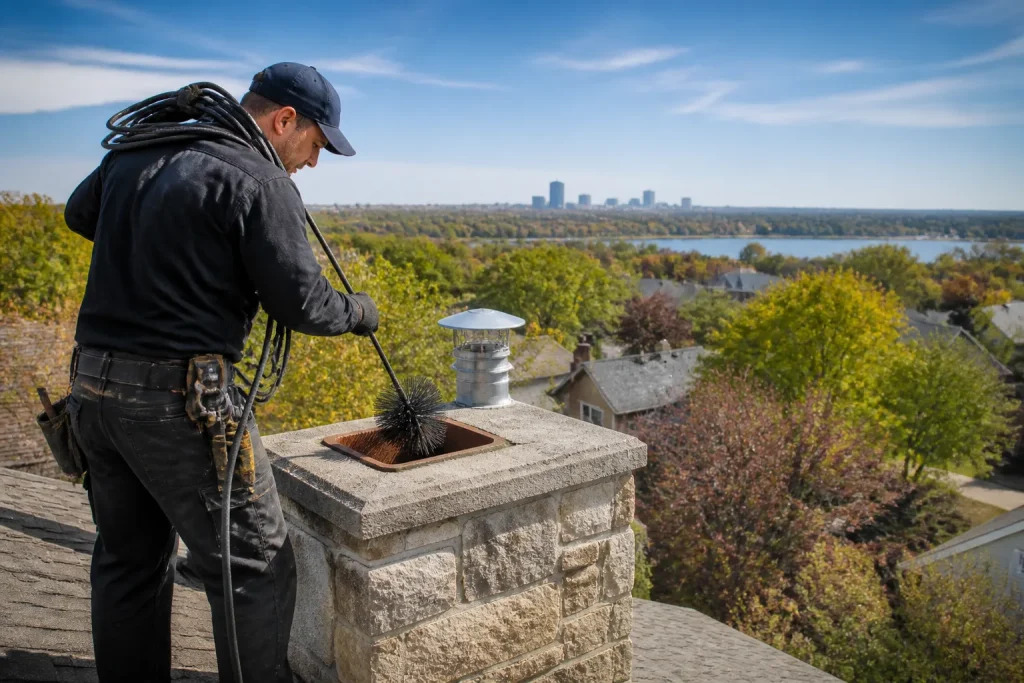
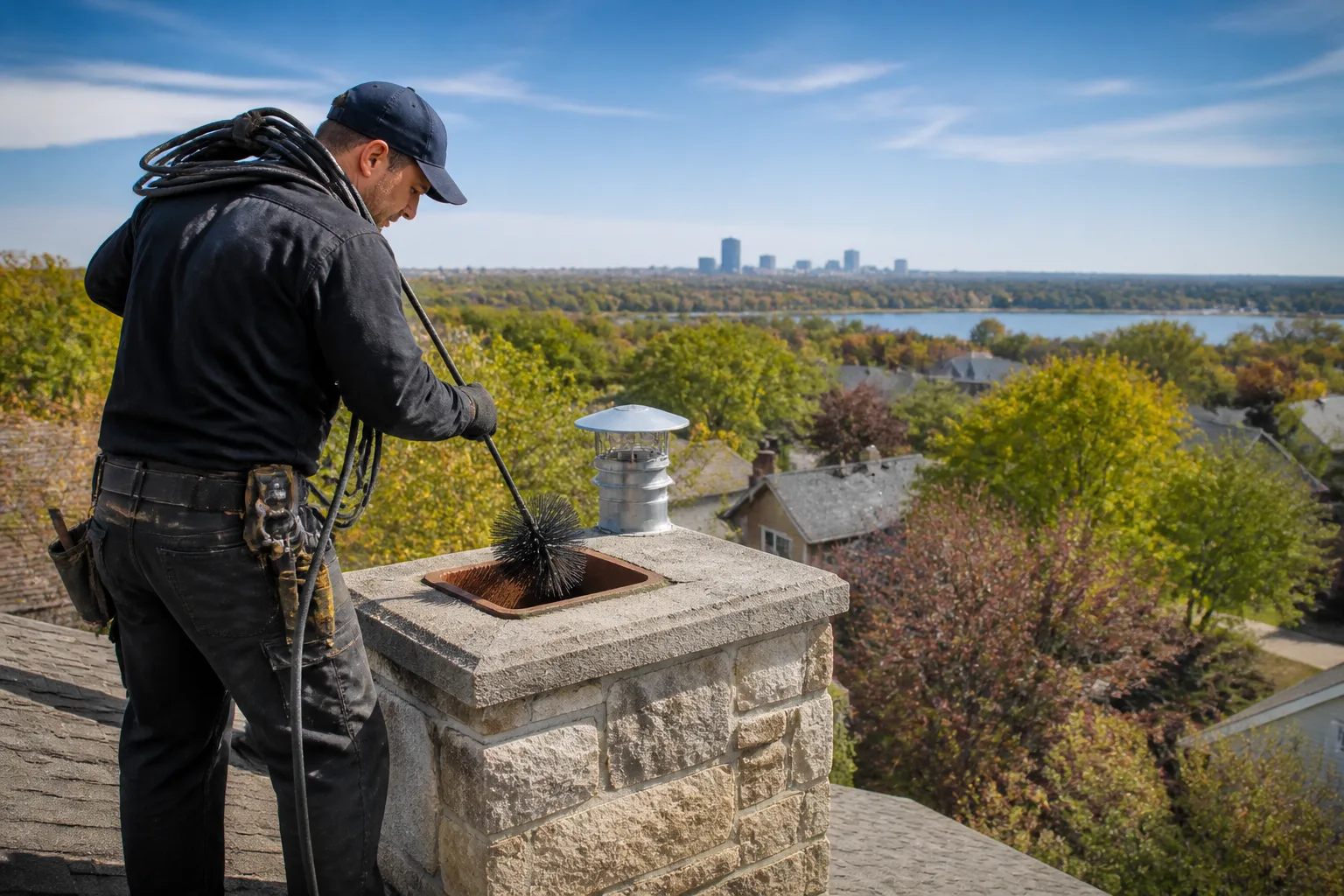
- Sweeping: Masonry flues get swept with poly or wire brushes matched to flue shape, plus a visual check of the clay liner joints. Prefab flues get a properly sized poly brush, and the technician is checking that no brush or tool damages the listed venting system in the process.
- Liner inspection: On masonry, a Level II camera inspection looks for gaps, spalling, and cracked tiles that could let heat reach framing. On Olympia units, the inspection confirms the venting system is intact and unmodified, because any breach in a factory-built flue is a structural safety issue, not a maintenance deferral.
- Firebox assessment: Masonry fireboxes get checked for deteriorating mortar joints and loose brick. Olympia fireboxes get checked for cracked refractory panels, which is the most common failure on these units.
- Top-end inspection: Masonry chimneys have crowns and clay flue tiles to evaluate. Olympia systems have a cap or shroud designed for that specific manufacturer’s termination, and mismatches at the top are a frequent problem.
None of this is exotic. It’s just specific. Generic chimney advice treats all chimneys the same and misses the differences that determine whether the service was actually done correctly. Using materials the chimney trade trusts, including Copperfield, Gelco and Olympia components, means the right part goes back into the right system rather than whatever fits the opening.
The Three Most Common Failure Points in Olympia Systems
In our experience, the same three problems account for the majority of Olympia issues we’re called out to assess. None of them is a manufacturing defect. They’re normal wear on a system that’s three or four decades old.
- Firebox panel cracking. The refractory panels inside the firebox take the direct heat, and over years they hairline-crack and eventually crumble at the edges. Small cracks can be monitored. Crumbling or displaced panels need replacement with a listed part, because a compromised firebox allows fire to reach the steel cabinet behind it.
- Top-sealing damper incompatibility. A top-sealing damper is a good upgrade for a masonry chimney – it seals at the top and helps control heat loss. On an Olympia system, the termination is part of the listed assembly, and some aftermarket dampers are not compatible with that design. Install one wrong and you’ve got an assembly that no longer functions as tested.
- Cap and shroud deterioration. The cap or shroud on these units is exposed to North Texas heat, hail, and the occasional hard freeze that comes with our mild but not always gentle winters. Sun-baked metal and aging seals let water in around the top, and water intrusion is the leading cause of chimney deterioration on any system. Our chimney cap & crown work exists because the top is usually where problems start.
If you’ve noticed water stains, rust in the firebox, or a damper that won’t seal, those symptoms point to a specific failure. They’re not a reason to panic, but they are a reason to get eyes on it.
What Happens When Replacement Parts Get Discontinued?
This is the question that separates prefab service from masonry work. A 35-year-old Olympia unit may need a part that’s no longer manufactured. So what are the options?
First, not every part is gone. Some components remain available through specialty suppliers, and a technician who works with Olympia components regularly has a better chance of finding what’s needed than someone who doesn’t stock or source that product line.
Second, when a part truly isn’t available, the fix is usually a compatible listed replacement, not an improvised one. The system’s UL listing covers how all its pieces work together, so swapping in an unlisted part voids that listing. That’s not a technicality – it’s the reason the assembly is safe to run. We can’t overstate this one: firebox and venting components are not an area for a clever workaround.
Third, when no compliant part solution exists, a reline or system replacement is the honest answer. That’s where cost moves up, and it’s also where a company with full-spectrum capability matters. We handle the full scope – from the firebox to the cap – so you’re not handed off to a subcontractor in the middle of a repair. Our chimney repair work can carry a repair from assessment through completion, and when the flue itself is deteriorating, resurfacing with HeatShield is sometimes the alternative to a full reline.
Repair or Replace? When the UL Listing Decides for You
Here’s the rule we walk homeowners through: if the damper, firebox panels, and venting system of an Olympia unit are intact or can be restored with listed parts, the system can be repaired. If a core component is damaged and no listed replacement exists, the system cannot safely stay in service and has to be replaced.
That decision isn’t a judgment call about what’s worth the money. It’s a structural rule about how factory-built fireplaces are engineered. A prefabricated fireplace is one assembly. Damage to one part of it affects the safety of the whole.
We help homeowners understand this using Chimney Sweep Lake Highlands service categories aligned with CSIA inspection levels. A Level I visual inspection covers what’s accessible without tools. A Level II camera inspection is what tells us whether the flue is sound. A Level III inspection, when needed, involves opening up portions of the system. Each level answers a different question, and the answer typically determines which path applies.
The fireplace repair conversation often comes down to understanding where your system sits on that spectrum. Nothing gets recommended without camera evidence you can see yourself, and if the work can safely wait, we’ll tell you that too.
When to call a pro: if you’ve spotted cracked firebox panels, rust in the firebox, a damper that won’t seal, or water stains near the chimney, don’t run the fireplace until someone assesses it. If your annual sweep is simply due, that’s easier to schedule than an emergency and keeps problems from compounding. Safety is a real reason to act – a compromised firebox can let fire reach framing, and a blocked or damaged vent without a working damper seal can put fireplace gases into the home – but these conditions come from wear, not bad luck. An annual inspection is how you catch them before they matter.
Related services in Lake Highlands: a standard chimney sweep is the starting point for most Olympia units, and it’s usually the visit that surfaces everything else covered in this guide.
The Bottom Line
Knowing whether your Lake Highlands home has an Olympia prefab system or a masonry chimney is the first step in getting the right care for it. Once you know, the maintenance path gets specific: proper flue cleaning for a metal venting system, careful inspection of the firebox panels, and matching the top cap or shroud to the listed assembly rather than whatever fits the opening.
If repair parts are available, repair. If they’re not, that system can’t safely stay in service. Having one company handle inspection, sweeping, cap and crown work, and repair means nobody’s handing off halfway through.
If you’re in Lake Highlands and need help, Chimney Sweep Lake Highlands offers free estimates – call (833) 508-9984. We answer 24/7. Fast dispatch from 7am to 7pm, Sunday through Friday. Our technicians have up to 8 years of experience, and every job is handled by a chimney specialist.
Frequently Asked Questions
Look inside the firebox for a metal data plate – it’s usually mounted on the firebox wall or behind a screen, and it lists the manufacturer and model. If the plate names Olympia, you have a factory-built system. If there’s no plate and you see brick and mortar behind the fire, it’s likely masonry. Call (833) 508-9984 if you’re not sure and we’ll help you figure it out.
Any sweep with the right poly brush and knowledge of prefab flues can clean one, but the reason to be picky is the inspection that comes with the sweep. Masonry and prefab systems fail in different ways, and a sweep who treats them the same will miss firebox panel cracks, cap or shroud mismatches, and venting issues that only matter on factory-built units. Ask whether the sweep checks those three things specifically.
We look for a compatible part through specialty suppliers that carry Olympia components. If a listed replacement isn’t available, the system can’t safely stay in service with an improvised part, and replacement or reline becomes the answer. Call (833) 508-9984 and we’ll walk you through what we find before you commit to anything.
Small hairline cracks are common and usually safe to monitor. Crumbling, displaced, or missing pieces mean the firebox is compromised and the fireplace should stay off until it’s assessed. A damaged firebox can let heat reach the framing of your home, so don’t assume an older system will hold. Call (833) 508-9984 for an inspection before you light another fire.
Written by the team at Chimney Sweep Lake Highlands.
Need Chimney Cleaning Help?
Call Chimney Sweep Lake Highlands - the local pro we connect you with is licensed and insured, with free written estimates in Lake Highlands.
(833) 508-9984